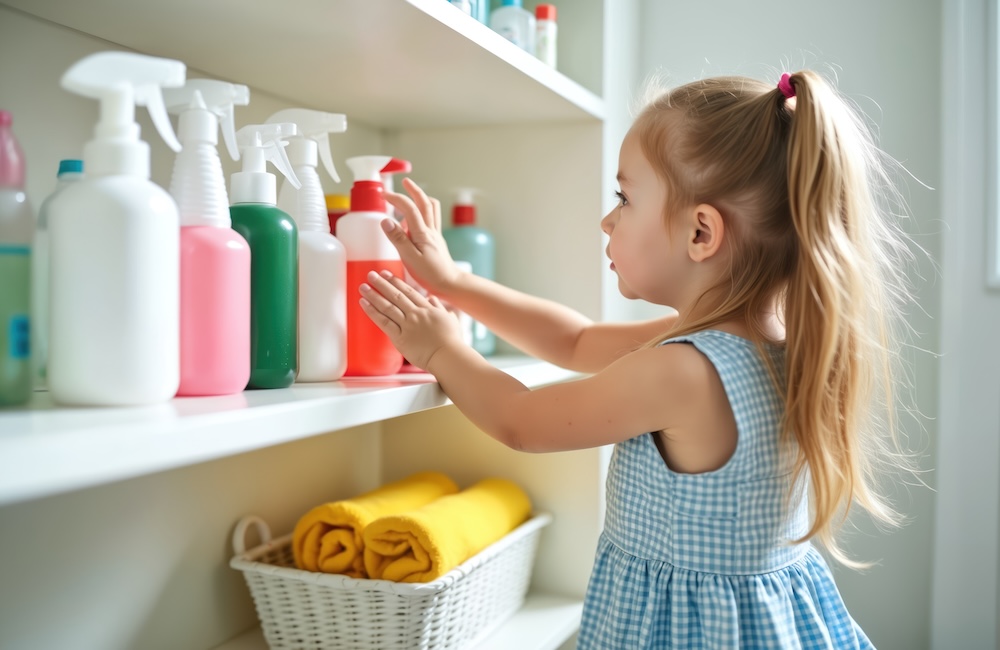
We take household chemical safety for granted as a common part of daily life and may overlook the serious risks that materials pose to children and pets. Curious loved ones often explore their environment, unaware of the dangers posed by substances like cleaners, pesticides, and medications. Precautions are essential to prevent accidental poisoning and to protect precious lives.
Storage practices for household chemical safety
The first step in prevention is safe storage. Always keep chemicals in their original containers with labels intact, and never transfer them to food or drink containers. Store all chemicals such as cleaning products, laundry detergents, paints, fertilizers, and medications in locked cabinets or on high shelves, or both, well out of reach of children and pets. Keep lids tightly closed after each use and return them promptly to their storage place. Avoid leaving products unattended during cleaning.
The most dangerous chemicals found around the home
Some household chemicals are especially hazardous, such as bleach, ammonia, drain cleaners, and toilet bowl cleaners. These are highly toxic if ingested. Laundry products can be easy to overlook when it comes to safe storage.
In the garage, gasoline, paint thinner, and other dangerous solvents should be locked away or out of reach of little ones or pets. Antifreeze is attractive to pets because of its sweet taste, but it is deadly. Pest-control products, rodent poisons, and even some essential oils can also be harmful.
Medication safety, an often-overlooked hazard
Medications, both prescription and over-the-counter, should be treated with the same vigilance as any chemicals. Many are dangerous in even small amounts. Keep them in high, secure storage. Regularly check for expired or unused medicines and dispose of them safely, following local guidelines.
What to do if a child or pet ingests a chemical
If a child or pet ingests a household chemical, quick action is vital. Though your first reaction may be to induce vomiting, do not do so unless instructed by a medical professional. For children, call the Poison Control Center at 1-800-222-1222 or seek emergency medical help immediately. For pets, contact your veterinarian or the ASPCA Animal Poison Control Center at 1-888-426-4435.
Keep the product container or label handy to provide information about the substance. Do not turn to home remedies. Professional guidance is crucial to determine the best course of action.
Related – Baby Gates Are a Great Safety Tool