
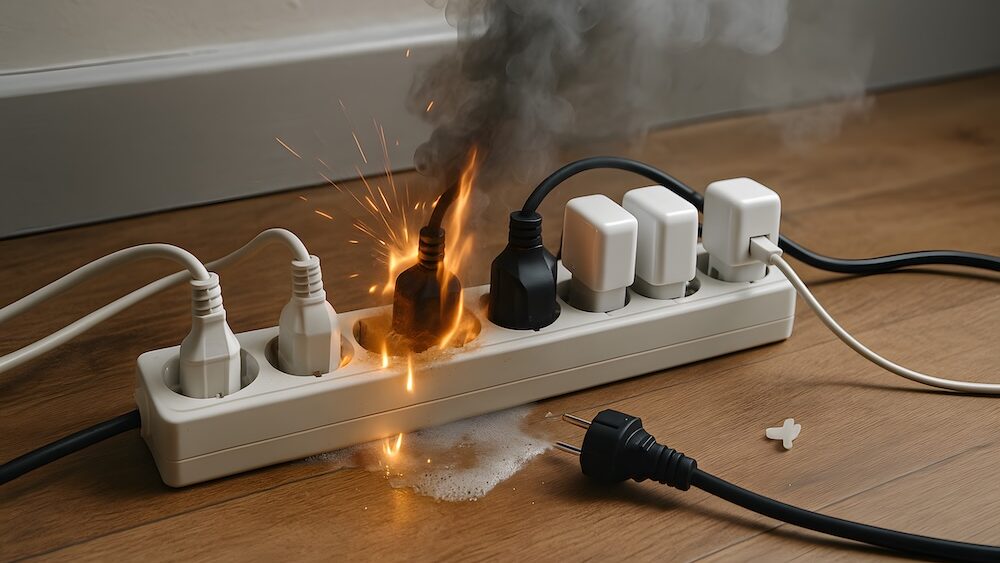
Power strips are a convenience we often take for granted, sometimes dangerously so. Practicing proper power strip safety is essential because these devices do not increase the amount of electricity available from a wall outlet. Overloading them can create a serious fire hazard.
Understanding the Limits of a Power Strip
A power strip plugs into a standard 120-volt wall receptacle, so the available voltage remains the same regardless of how many devices are connected. The important factor is the total amperage or wattage being used.
Most power strips are rated for up to 15 amperes. This makes them suitable for low-demand items such as lamps, televisions, gaming consoles, and phone chargers. Staying within these limits is a key part of safe use.
High-Demand Devices to Avoid
One of the most important aspects of power strip safety is knowing what not to plug in. Devices that use motors or heating elements draw significant power and should always be plugged directly into a wall outlet.
Avoid using a power strip for:
- Refrigerators
- Hair dryers
- Air conditioners
- Space heaters
- Toasters
- Freezers
- Power tools
These items can overload the strip, leading to overheating, tripped breakers, or even fire.
Everyday Electrical Safety Tips
Using power strips correctly goes beyond what you plug into them. A few simple habits can reduce risk and improve overall electrical safety:
- Do not plug one strip into another
- Avoid placing a strip under rugs, furniture, or flammable materials
- Be mindful not to exceed the total wattage, even if outlets are available
- Turn off the strip when devices are not in use
These small adjustments can make a big difference in preventing hazards.
A Simple Way to Protect Your Home
Following basic power strip safety practices helps protect your home from unnecessary electrical risks. When used properly, power strips are a helpful tool, but when misused, they can quickly become dangerous.
Related – Electricity: Your Home’s Risky Resource