
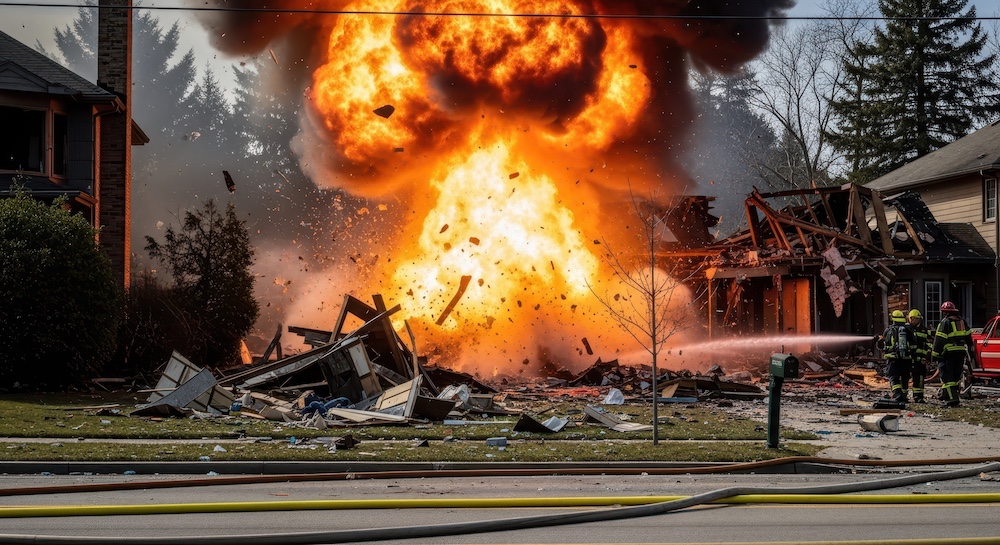
You won’t have to guess if you have a natural gas leak in your home. That rotten-egg odor rivets your attention. Occasionally, doorbell cameras capture the terrifying scene of an explosion at a nearby house due to a gas leak. Here’s how to safely deal with the emergency before it comes to that.
The nose knows a gas leak
In its original state, natural gas is clear and odorless. A chemical called mercaptan is added to impart its pungent odor, alerting users to any leak. When natural gas is free-flowing into the surrounding air, it can ignite and explode with a tiny spark, especially if the leak has accumulated gas indoors.
Most often, the leak will be at a gas-using appliance such as the stove or water heater. Sniffing and listening for a hiss around gas-powered appliances and supply lines—or noting the visual presence of a misty-looking cloud—will help confirm your suspicions.
What should you do?
- If you can do so quickly and safely, open windows and outside doors of the house, starting in the area closest to the leak.
- It is critical not to turn on any electrical switch or dial. Do not use a landline telephone.
- Evacuate the home or building immediately. Take your cell phone. When you are at least 50 yards away, call the gas company’s emergency line. This number is prominently displayed on your bill and on the company website. They will dispatch an emergency crew right away.
- Knock on your neighbors’ doors and notify them of the leak. Tell them to avoid flipping any electrical switches and to evacuate and join you at a safe distance from your home.
- Stay away from the house until the gas crew says it is safe to return.
Who pays for the repair?
Who shoulders the cost of the repair is straightforward to determine. If the gas leak is on the line up to the house meter, the utility company pays. If the leak occurs after the meter and into the house, the homeowner is responsible.
Gas leak detectors
Sometimes gas can leak in such small quantities that you may miss it or not know where the smell is coming from. Home gas detectors, available online, can give homeowners peace of mind. It’s also a good idea to keep emergency numbers for utility companies and first responders in your phone’s contact list.
Related – Protecting Your Home From Dangerous Radon Gas