
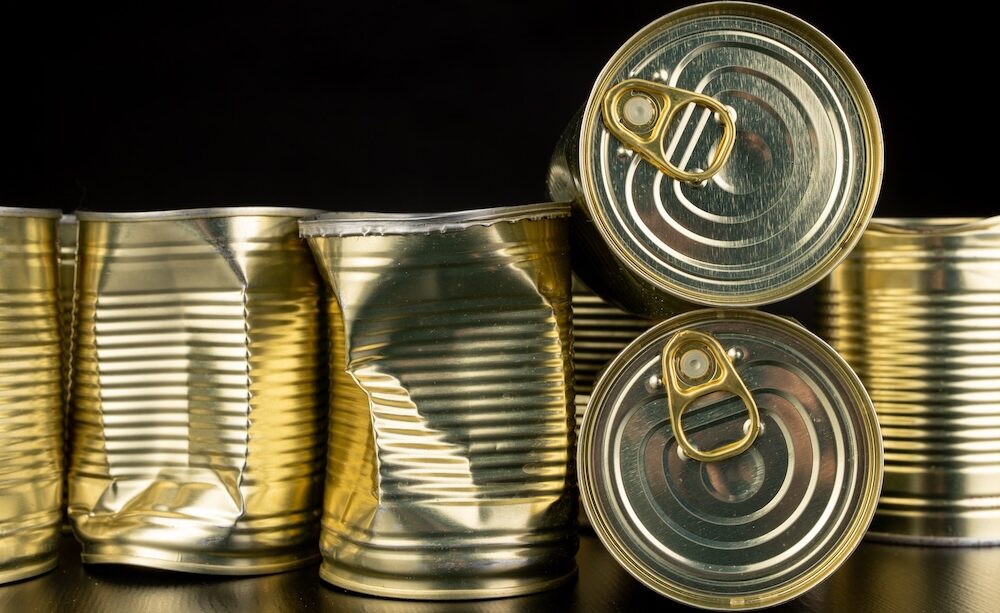
You’re unloading your groceries at home and notice some dented canned food. Is it safe to eat the contents? Here’s a guide to when it’s safe (and when it’s not) to eat food from a dented can.
Why does canned food have a long shelf life?
Canned goods have been around for a century or more and still provide the longest shelf life for food, other than possibly dehydration. The cans are vacuum-sealed and durable, but they are not impervious. When dropped or banged, they can dent, and if the dent is severe or in key locations, bacterial contamination can occur.
Is dented canned food safe?
The majority of dents occur along the sides of the can and do not cause rupture or expose the contents to air and pathogens. Inspect cans on the grocery store shelf for dents, and you will find many, most of which are minor.
The dents to be careful of are the deeper ones, especially if their edges are creased, as this could rupture the seal.
The other danger zones are dents along the top or bottom rim or along the seam running down the side. These are places where cans are sealed during manufacturing and are vulnerable to penetration by a hard impact.
Signs of spoiled or contaminated canned food
When in doubt, you can detect possibly contaminated food if:
- You see a dent on the rim or the seam down the side.
- The dent is deep, and one or more of its edges are creased.
- You see liquid seeping from the dent, a rim, or the seam.
- There is rust on the can, especially at the rim or seam.
- The contents have an off-putting smell or appearance.
Related – What Do Those Food Expiration Dates Really Mean?