
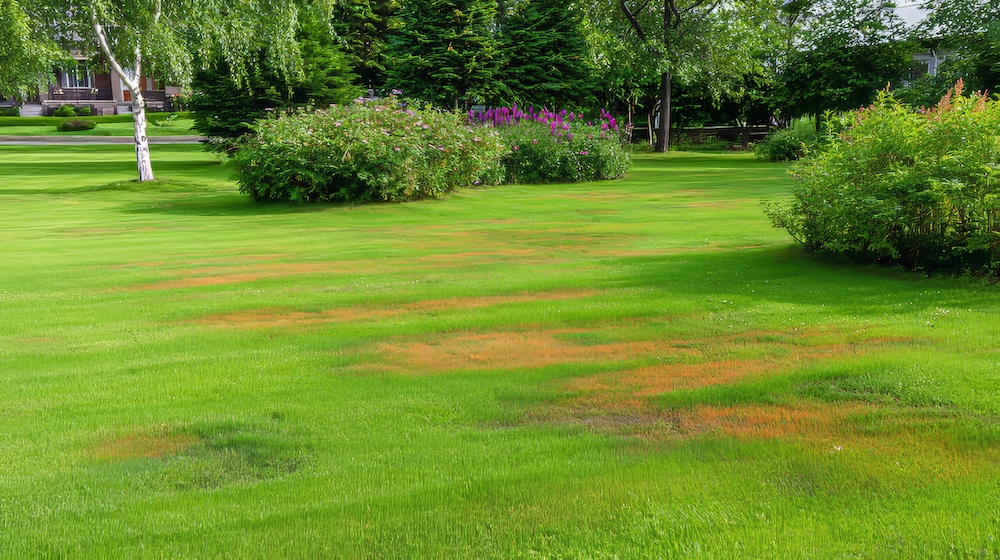
Your front yard gives one of the first impressions of your home, so you want it to be free of lawn diseases. A lush, green lawn provides a vibrant setting for neighbors to view your home. When a disease strikes, you want to restore health and vitality as soon as possible.
Five common lawn diseases, how to recognize them, and how to treat them
- Dollar spot can affect any type of lawn grass in any part of the country. It presents as brown spots, a few inches across, that expand and often merge with other patches. It is caused by a lack of nitrogen, and when moisture is retained too long in the soil and the thatch of a lawn. Apply an extended-release nitrogen fertilizer; you may not need to treat with a fungicide, but if you do, use a broad-spectrum product. Water the lawn less frequently but for a longer duration.
- Brown patch also affects lawns nationwide, particularly fescue and ryegrass. Recognize it by extensive areas of brown grass, with some patches growing large enough to merge with others. In this case, excessive nitrogen and watering can cause and exacerbate the disease; reduce both.
- Necrotic ring spot also causes patches of brown grass, but sometimes green grass rallies in the center of the patch, giving it an “eye” appearance. This disease is prevalent in the northern states on Kentucky bluegrass. Reduce the nitrogen content of your fertilizer and aerate the lawn to treat the problem.
- Leaf rust presents a distinctive pattern of red spots on the leaves of your grass. Particular to ryegrasses, it is caused by a lack of nitrogen, low moisture, and high humidity. Although it does not harm the grass, it is certainly unsightly. Treat with time-released nitrogen fertilizer and sufficient watering.
- Powdery mildew affects lawns in cooler regions with high humidity and minimal air circulation, typically in consistently shady areas. The grass takes on white, powdery, or web-like spots. Trim back overhead tree branches to admit more light and reduce watering to allow the grass to dry.
You may notice common themes across these: too much or too little nitrogen and too much or too little watering. Best practices include understanding your grass’s needs and following appropriate fertilization and watering protocols.
Related – Your Ultimate Guide to a Healthy Lawn: 8 Best Practices for Gorgeous Grass