
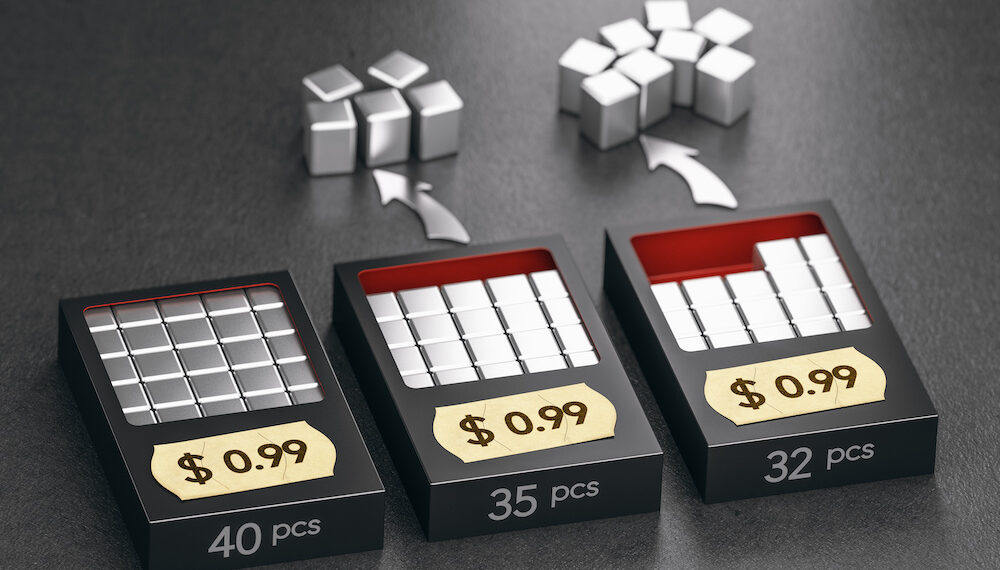
Since inflation began accelerating, consumers have encountered sleight of hand at the grocery store and other retailers. In a tactic known as shrinkflation, manufacturers reduce package size and product quantity while keeping the price the same. Now, the tactic is being adopted in the new home industry.
Less is not more
Shrinkflation in the consumer goods market leads to fewer products or inferior products for the same price you used to pay. That 12-ounce bag of chips or the 23-ounce bag of laundry detergent has been reduced to 10 and 20 ounces, respectively. Yet you continue to pay the original price. This manipulation has happened across the spectrum of consumer goods.
Shrinkflation comes to the home-building sector
As inflation has risen, home builders have faced the same dilemma as consumer product manufacturers. Inflation and supply-chain shortages have priced many buyers out of the market. Higher mortgage costs from rising interest rates have hit these potential buyers with a one-two punch.
As a result, home builders are engaging in shrinkflation of their own. Home square footage has shrunk by three to four percent in the past few years, with prices remaining the same or rising only marginally.
Going even smaller
Some new home builders are also shrinking square footage as part of the tiny house movement. Developers are buying parcels of land, carving out smaller lot sizes, and building 350- to 600-square-foot houses on them.
This trend is not driven entirely by inflation. Demographics also play a crucial role, as Gen Z is waiting longer to marry and to have children, and baby boomers and Gen Xers are downsizing in their empty-nest years.
Be a savvy home shopper
You can take a few smart steps to avoid being shorted by housing shrinkflation.
- Evaluate homes you are considering based on price per square foot, not just the total sales price. Ask the seller what the price per square foot has been in recent years and how much it has increased. Whether you are looking at new construction or existing homes, comparing properties this way gives you a better sense of value.
- Builders often have preferred lenders that offer financing to buy down points, making mortgages cheaper and helping offset increased home prices or shrinkflation-driven downsizing. Explore the lender incentives.
- Builders also offer allowances for upgrades to items such as kitchen and bathroom counters and cabinets, flooring, and appliances. Explore these and take advantage of what you can to maximize your value.
- Remember that existing homes may be priced to compete favorably with new home builders. Existing home sellers also may be more willing to negotiate prices than builders, who may be less flexible.
Related – How Inflation and Rising Interest Rates Affect the Housing Market