
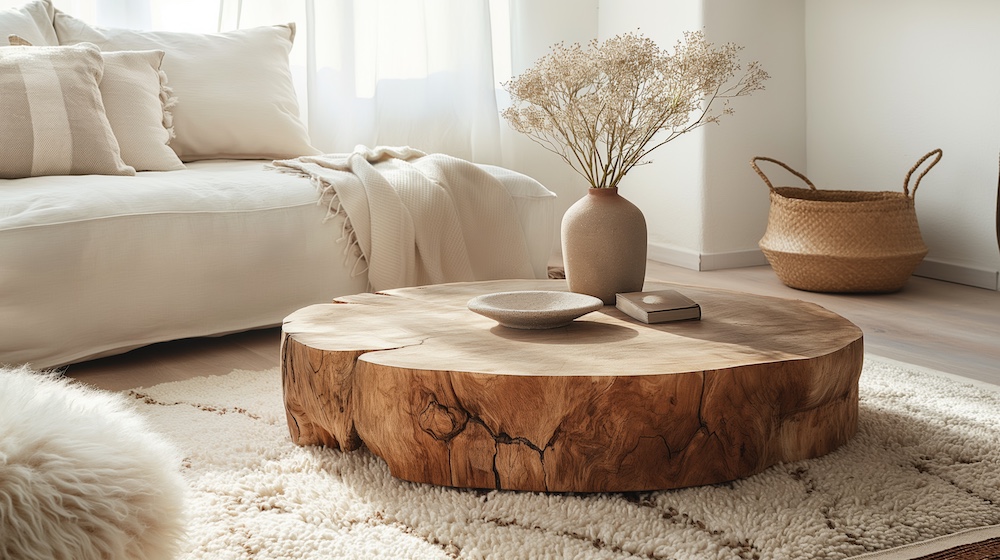
Lately, homeowners and interior designers are incorporating darker wood and stone materials to provide visual warmth and a tactile connection to natural elements. These natural elements are not only gorgeous but are also durable and sustainable, aligning with other important building trends.
Visually warming woods
An example of a natural element is burl wood. With its distinctive swirling grain and unique patterns, it has become a sought-after material for cabinets, paneling, and furniture. Burl is so distinctive and eye-catching that homeowners know they’ll achieve an unparalleled look of luxury.
Other dark-toned natural woods surging in popularity are walnut, mahogany, and ebony. These elegant woods offer a depth and richness that lighter woods can’t match, creating a sense of sophistication and intimacy. They are used for wide-plank flooring, custom cabinetry, and soaring ceiling beams, often paired with lighter walls and furnishings. Sometimes a table may be cut as a single slice from a whole tree trunk.
Rocking natural elements
Natural stone counters have been popular for over 20 years, and now stone is taking prominence in flooring and even on accent walls. Marble, granite, slate, and other types are gracing homes like never before. New stone-finishing techniques offer a range of looks, making stone versatile for both modern and traditional homes.
A buzzword consumers may hear in relation to these materials is “biophilic,” a philosophy of creating a living environment in which people feel connected to natural elements. Similar to the Scandinavian concept of hygge, biophilic home settings foster calmness and restoration.
Consumers can view these natural trends as an extension of earlier growth in stone counters and fine wood furniture, now expanding to other home surfaces to create surroundings of sensual delight.
Related – Spice Up Your Home’s Decor With Texture