
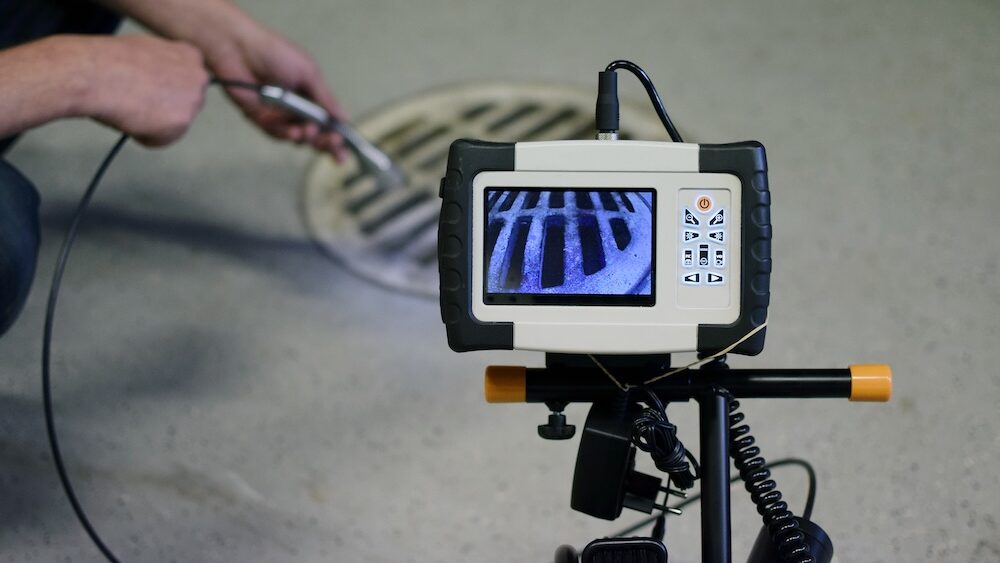
When a toilet or drain persistently backs up, it can be helpful to know exactly where the clog is and how serious it is; a home inspection borescope can help you find out. It’s a smart, affordable tool that lets homeowners inspect plumbing, HVAC ductwork, and other hard-to-reach areas without tearing anything apart. With this tool, you can diagnose issues quickly and avoid unnecessary repairs.
How a borescope works: Inspect like a professional
A borescope for home inspection operates on the same principle as medical scopes used by doctors to view blockages inside the body. It consists of a flexible or semi-rigid tube with a small camera at the end and a display screen that shows real-time images.
Some models connect directly to your smartphone or tablet, making inspections even easier.
Key features include:
- Built-in LED lights for visibility in dark spaces
- Real-time video or image capture
- Flexible tubing for navigating tight spaces
This allows you to spot problems inside walls, pipes, or vents without dismantling anything.
Key features to look for in a borescope
Scope diameters can be as small as 5 millimeters, perfect for sliding into narrow pipes or HVAC ducts. Lengths vary, too, and some models have long scopes that extend 30 feet or more down the line to clear blockages.
Many borescopes are waterproof, which means you can safely use them to check plumbing lines, drains, and outdoor gutters.
An affordable tool that can save you money
One of the biggest advantages of a borescope for home inspection is cost.
- Entry-level models start around $30.
- Mid-range options cost from $50 to $150.
- Even advanced models cost far less than a professional inspection.
For homeowners who prefer to diagnose issues before calling a contractor, this tool can quickly pay for itself.
Related – Your Need-to-Know Plumbing Fitness Checklist