
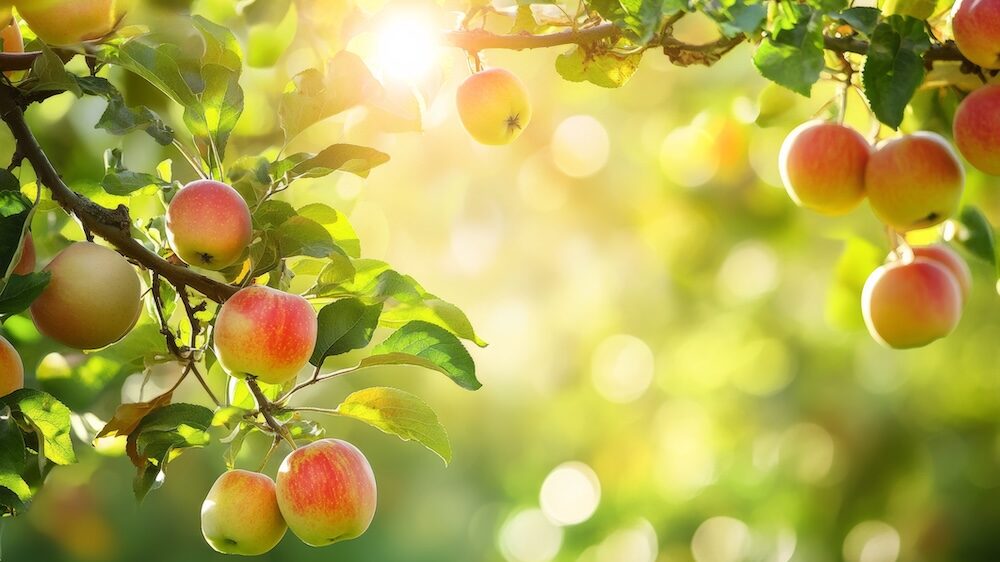
Growing vegetables is rewarding, but planting fruit trees at home offers something even more satisfying: fresh, homegrown fruit right from your own yard. With the right knowledge, fruit trees at home can thrive in many climates and provide years of delicious harvests.
Here are some popular fruit tree varieties, along with tips on climate, soil, fruiting seasons, and ease of maintenance.
Apple trees: classic choices for backyard orchards
Apple trees are classic picks for homeowners interested in raising fruit trees. They grow best in USDA zones 3–8, which cover most of the contiguous United States. Apples do best in well-draining loamy soil and need full sun. Most varieties bear fruit from late summer into fall. Once established, apple trees are fairly easy to care for with annual pruning and regular watering.
Pear trees: low-maintenance options for beginners
Pear trees thrive in zones 4–8, an area only slightly smaller than apples’. They love full sun and well-drained soil. They bear fruit from late summer to early fall. Pears are slightly less prone to pests and diseases than other fruit trees, making them a less vulnerable, low-maintenance option for new gardeners.
Peach trees: sweet summer favorites
Peach season is synonymous with summertime—think peach cobbler and ice cream! Peaches bear fruit in mid- to late summer and thus thrive in zones 5–9. They require sandy or loamy soils and abundant sunlight. While they may need a little extra attention to prevent disease, many varieties are bred for easier care and resilience.
Cherry trees: early-season fruit trees at home
If peach cobbler has a rival, it’s cherry cobbler! Sweet cherries grow well in zones 5–7, while sour varieties can do best in zones 4–9. Both types need well-drained soil and a sunny spot. Cherries bear fruit from late spring to early summer. Like George Washington, we cannot tell a lie: Cherry trees require some pruning but are generally straightforward to maintain once established.
Citrus trees: growing fresh fruit in containers
Oranges, lemons, and limes flourish in warm climates of zones 9–11. Citrus trees prefer sandy, slightly acidic soil and plenty of sunshine. Their fruiting season differs from that of the others discussed here, with most varieties producing fruit in winter or early spring. They can be grown in large containers on your backyard deck and brought indoors during cold snaps. Citrus trees are quite hardy and need little care beyond regular watering and feeding.
Related – Planting Roots: How to Pick the Best Trees for Your Home