
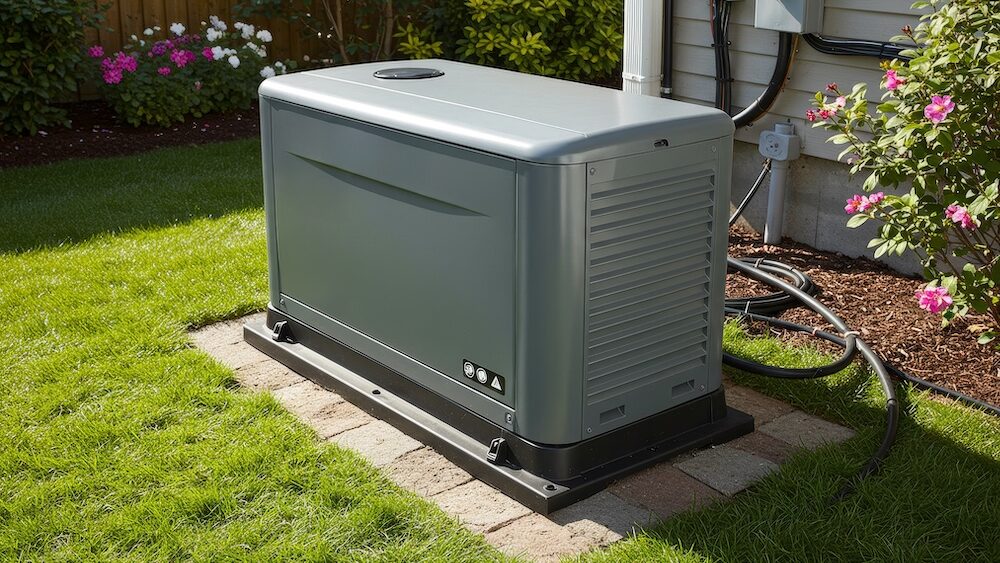
During a power disruption, a home generator can alleviate inconvenience and, in some cases, be lifesaving. How do you shop for and choose a home generator?
Types of home generator systems
There are a handful of home generator types to choose from, depending on your needs:
- If you want the top-of-the-line in home power generation, the home standby generator offers seamless operation the moment your power goes out. Hardwired into your home’s electrical system, a sensor detects the loss of power from the utility line and automatically kicks on the whole-house generator. A licensed professional must install a home standby generator system to ensure it complies with safety, noise ordinance, and other regulations.
- Portable generators are typically chosen when you don’t want the expense or need a whole-home system. You would select a few key appliances to power during an extended power failure, such as the refrigerator to prevent food spoilage, portable heaters or air-conditioners, and perhaps the washer and dryer.
- Inverter generators adjust speed based on the load placed on them. They also run quieter.
- Solar generators are virtually silent. They are a battery with a solar panel to keep the battery charged. That battery then powers your small devices, such as laptops and cell phones.
Fuel usage
Generators need a fuel source to generate power. Your choices are:
- Gasoline-powered generators entail keeping cans of gasoline on hand. Since it will sit unused for extended periods, you must add fuel stabilizer to the gas and start the generator once per month, letting it run for 5 to 10 minutes.
- Natural gas is safer and requires a natural gas supply line to be plumbed into the generator.
- Propane gas canisters hook up like a gas grill. Propane produces less power than gasoline or natural gas.
- Dual-fuel generators have a switch that allows the user to opt between gasoline and natural or propane gas.
How much can you power?
Select a generator based on its total wattage, then calculate the total wattage required to operate the selected appliances. For example, you may consider a 9,500-watt generator to power a refrigerator (1,000 watts), a washing machine (1,200 watts), and a window air-conditioner (1,200 watts). Just those appliances add up to 3,400 watts, leaving room to power a few more smaller appliances.
Keep in mind that using a portable generator involves using extension cords to run from the appliances to the generator. You would run individual cords from each device to the generator. Never plug several devices into a power strip on a single extension cord. Clearly, this is a temporary situation. If you anticipate longer-term blackouts, a home standby generator is preferable.
Related – 5 Advantages to New Portable Power Stations