
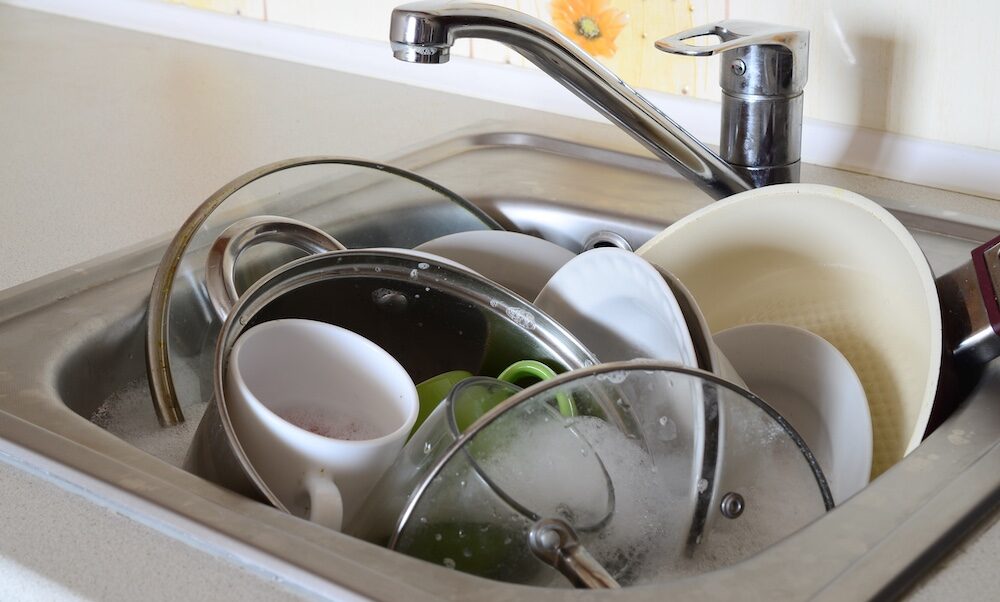
We’ve all done it: left a sink full of dishes soaking in soapy water because we were too tired to finish cleaning or because some had hardened food stuck to them. But is that soaking dish generating a biohazard? The short answer is yes, but don’t let that scare you. There are ways to clean without getting sick.
Soaking dishes are havens for germs.
Though most people may think another room in the house has the most pathogens, the real danger lies in the kitchen sink. Also, dish rags and sponges play host to colonies of bacterial predators. Salmonella, E. coli, and other illness-causing bacteria thrive in sinks and on surfaces like cutting boards because food has been prepped there. Raw meat and eggs are the most likely to contaminate countertops and other areas.
When you leave dirty dishes in the sink after food prep—and after eating—bacteria can explode on plates, glasses, and silverware. Crusty food, even when soaking in hot water to soften it, creates an ideal breeding ground for pathogens.
It gets worse. Unattended soaking dishes attract insects like ants and roaches, which can spread germs throughout the kitchen as they roam.
Germ warfare
- The best thing you can do is wash up the dishes right after dinner, put them in the dishwasher, and turn it on. Immediate cleanup interrupts the bacterial breeding cycle.
- If time doesn’t allow you to do a complete cleanup, do as much as you can. If you have dishes and silverware with caked-on food, place them in hot, soapy water, preferably with antibacterial soap.
- After all dishes are cleaned, scrub the sink thoroughly with a dish sponge soaked in antibacterial soap. Allow the antibacterial soapy water to remain on surfaces for at least 5 minutes (known as “dwell time”) to kill germs.
- Run the dishes in the dishwasher on high heat to thoroughly sanitize them. Some dishes and cutting boards are not dishwasher-safe, so hand-scrub them with antibacterial soap, then set them out to dry. Do not put them away until they’re completely dry.
- Finally, either put your dish sponge in the dishwasher with the dishes or zap it in the microwave for about 30 seconds, until the water is saturated with scalds.
- Be sure to wash and rinse your hands thoroughly at the end.
Related – The Path to a Germ-Free Home: Purging Pathogens