
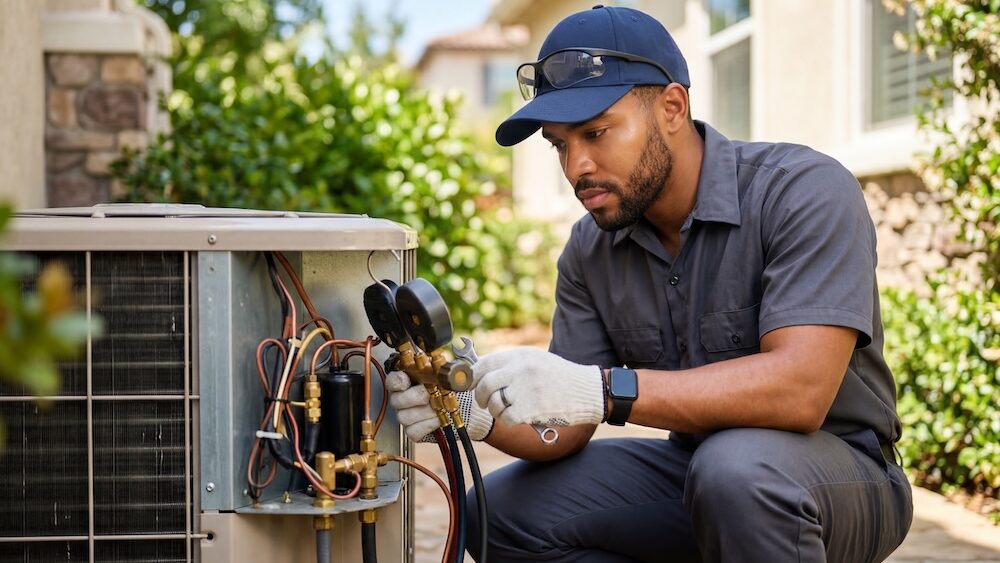
Older homes often need an HVAC system upgrade to meet modern standards. Replacing an old HVAC system is one of the most common home upgrades because it brings comfort and significant monthly energy savings. HVACs manufactured in the last 10 or even 5 years are more efficient and less expensive than older models.
Hire a professional for an HVAC system upgrade
HVAC replacement is highly technical and requires a pro, not to mention three different types of licensing (HVAC, plumbing, and electrical). An HVAC pro will assess your home’s needs, recommend suitable equipment, and ensure safe installation. Ask for references, check certifications, and compare quotes before making your decision.
Moving up to the modern age
Older HVAC systems are much less efficient than newer models. They use outdated technology and often lack features designed to reduce energy consumption. Modern systems are built with better design and components, better refrigerants, and smart thermometers, all of which help lower operating costs. Aging systems also tend to degrade over time, leading to wear and air loss through leaky ducts, resulting in uneven temperatures and wasted energy.
HVAC unit size matters
An undersized unit will struggle to heat or cool your home, while an oversized system will cycle on and off too frequently, reducing efficiency and shortening its lifespan. HVAC pros use formulas called load calculations to recommend a system sized for your home’s square footage, insulation, number of windows, and other factors.
Zoning is another important ingredient. In homes with multiple floors or rooms that heat and cool differently, zoning allows you to control temperatures in specific areas. Different parts of the house have separate thermostats and compressor systems. This means you can avoid wasting energy on unused spaces and keep commonly used rooms at optimal comfort levels.
For rooms without ducting, or for spaces converted into living areas, such as garages, a ductless mini-split unit might be the answer.
Installation day
Removing the old system involves shutting off the power and safely dismantling and disposing of old components and refrigerants. Next, technicians will inspect and, if necessary, repair or replace the ductwork to ensure there are no air leaks. The new system is then installed, connected to your home’s electrical and ductwork, and tested to confirm proper operation.
Your HVAC professional will educate you on the new controls and recommend maintenance steps to keep the system running smoothly for years to come.
Related – How Your Home’s Major Systems Affect Value