
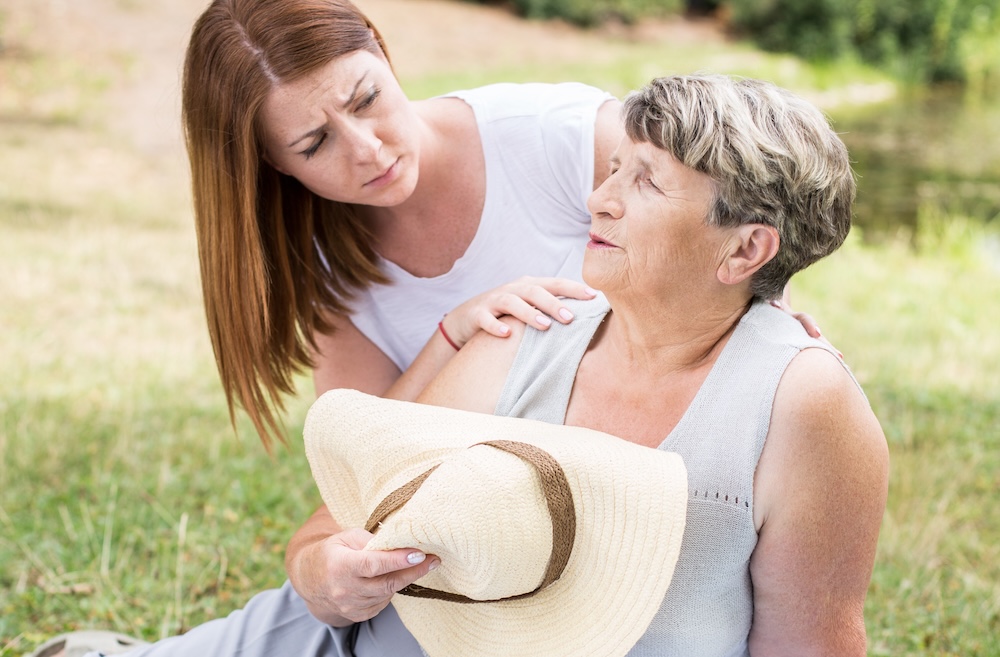
Working outside around your home combines your duty to maintain the property with the satisfaction of creating a gorgeous landscape. But at certain times of the year, during temperature extremes, that passion can endanger homeowners, leading to conditions like heat exhaustion or heat stroke on blazing-hot days, as well as hypothermia when it’s extremely cold. Watch out for these health threats.
Heat exhaustion and heat stroke when working outside
During hot weather, the primary concerns are dehydration, heat exhaustion, and heat stroke.
Heat exhaustion is characterized by profuse sweating, dizziness; confusion or delirium; and cool, clammy skin. Moving to a cooler location, resting, and drinking a cool (not ice-cold) sports drink with less than 6% glucose helps restore the body to normal.
Heat stroke is a significant, life-threatening ratchet up from heat exhaustion. Heat stroke often follows untreated heat exhaustion. The victim may no longer be sweating due to dehydration, and the skin is flushed, nearly dry, and hot to the touch. The person may faint and hyperventilate. Move the person to a cooler location and call 911. Heat stroke can be fatal, and the person must receive medical attention immediately.
In hot weather, schedule activity early in the day, before temperatures climb. Wear lightweight cotton clothing and a wide-brimmed hat, and frequently apply sunscreen to exposed skin. Drink plenty of water and sports drinks.
Hypothermia and other cold-related ailments
In contrast, working outside in very cold weather can cause hypothermia and frostbite. It can also exacerbate other health issues.
Hypothermia is a medical emergency characterized by confusion, slurred speech, and lethargy. It is crucial to move the person to a warmer place and call 911. While waiting for help, remove any wet clothing and provide warm, dry cover to restore body heat.
Frostbite occurs when the skin freezes. Frostbite is characterized by stages that depend on the extent of skin damage. It starts with painfully cold skin, followed by a sensation of pins and needles, then numbness. In its final stages, frostbite causes the skin to become hard and black due to irreversible tissue damage that may require amputation. This level of danger is rare in modern times with ample supplies of warm clothing and indoor heat. If you are working outdoors around your home, take breaks and retreat indoors before frostbite can set in.
Another danger in cold weather is the risk of a heart attack while shoveling snow. It is recommended that people age 65 or older avoid shoveling snow if they are not in good physical shape and have conditions such as heart disease, diabetes, obesity, high blood pressure, or high cholesterol.
To prevent cold-related dangers, schedule work activities midday when temperatures have warmed. Wear layers of warm clothing, cover your face with a ski mask or scarf, wear gloves, drink plenty of fluids, and, if possible, take breaks from prolonged exposure.
Related – Extreme Temperatures Affect Appliances